
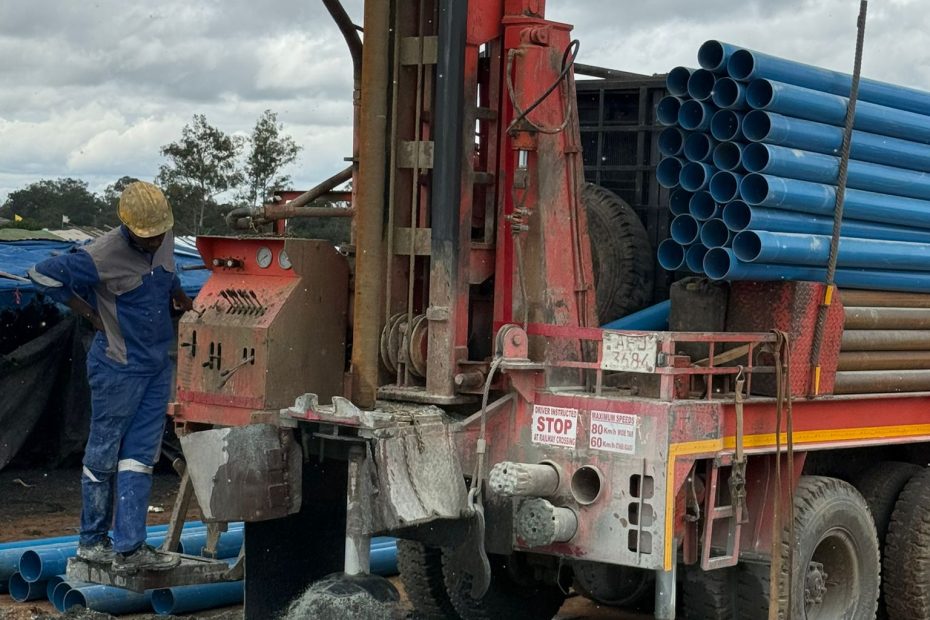
The Mutapa Workspace in Gweru is taking a major step forward in becoming a modern, safe, and fully functional hub for the community, with the commencement of borehole drilling. This upgrade ensures reliable access to clean water, supporting everyday activities and strengthening safety measures, including disaster preparedness.
The workspace is being modernised to provide a conducive environment for working, collaborating, and pursuing productive activities. With the new borehole, residents, entrepreneurs, and community members using the space will benefit from reliable water access, improved health, and a safer environment to support their livelihoods.
Beyond improving daily operations, the borehole will play a critical role in supporting the workspace as a hub for innovation and enterprise. By ensuring consistent water access, it enables activities such as training programs, small-scale projects, and community initiatives to run without interruption. Moreover, it directly contributes to climate and disaster resilience by reducing vulnerability to water shortages and supporting preparedness for emergencies, making the workspace not only a center for productivity but also a model for sustainable urban development.
This initiative is led by Silveira House Jesuit Social Justice and Development Centre, in partnership with the Gweru City Council and the Ministry of Women Affairs, and supported by CAFOD (Catholic Agency for Overseas Development) under the Urban Resilience Project. The project strengthens urban communities’ ability to adapt to climate, economic, and social challenges, building long-term capacity and resilience.
The borehole also highlights the power of collaboration between local authorities, government institutions, development partners, and the community. By investing in sustainable infrastructure, the project demonstrates how modernised community spaces can enhance productivity, safety, and well-being.
As modernisation continues, the Mutapa Workspace is set to become a vibrant and inclusive hub—showing how innovation, collaboration, and targeted support can transform urban communities and improve lives in Gweru.